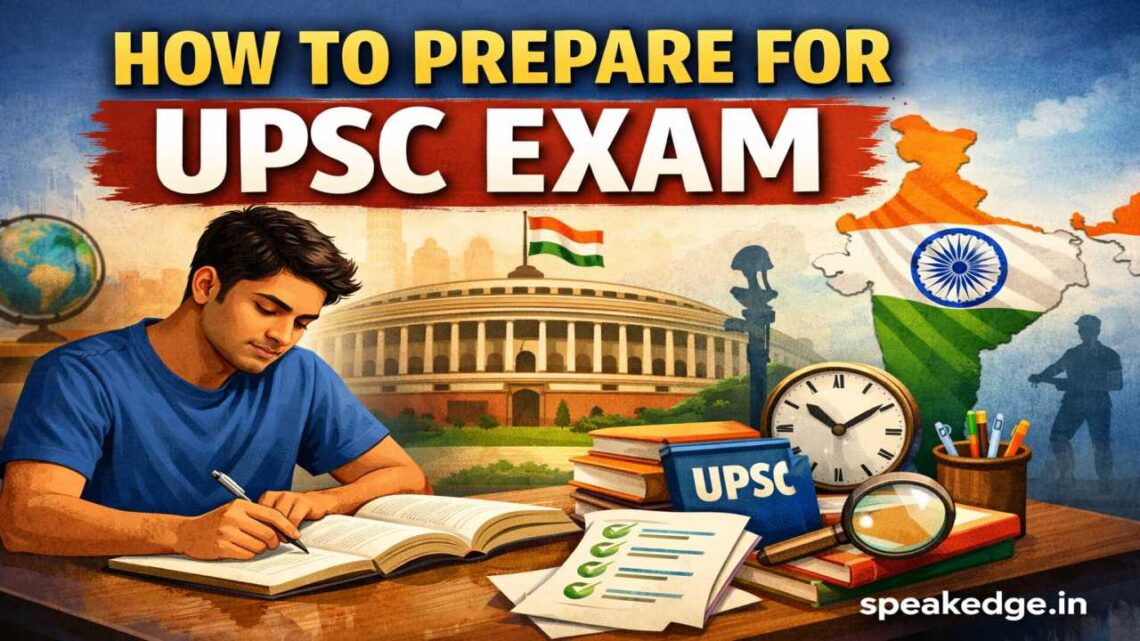
The Ultimate Roadmap: How to Prepare for the UPSC Exam
Preparing for the UPSC Civil Services Examination (CSE) is often described as the “mother of all exams.” It is a journey that tests not just your knowledge, but your patience, discipline, and mental strength. If you are starting today, you aren’t just preparing for a test; you are preparing for a lifestyle change that will shape you into a future administrator.
In this comprehensive guide, we will break down the mountain into manageable steps. Whether you are a college student, a working professional, or a full-time aspirant, this roadmap is designed to help you navigate the UPSC landscape with clarity and confidence.
1. Understanding the UPSC Exam Pattern
Before buying a single book, you must understand the battlefield. The UPSC CSE is conducted in three distinct stages, each designed to filter out the best minds in the country.
- Stage 1: Preliminary Examination (Objective): This consists of GS Paper I (History, Geography, Economy, Polity, etc.) and the CSAT (GS Paper II). The CSAT is a qualifying paper where you need 33% to pass.
- Stage 2: Main Examination (Descriptive): This is the heart of the process. It consists of 9 papers, including an Essay, 4 General Studies papers, and 2 Optional subject papers.
- Stage 3: Personality Test (Interview): A face-to-face interaction with the UPSC board to assess your personality, presence of mind, and suitability for the civil services.
2. Mastering Your Communication Skills
One of the biggest myths is that you need to be a scholar in English to clear UPSC. However, you do need to be able to express complex ideas clearly and professionally. Whether it is writing an 800-word essay or answering a panel member during the interview, your command over language is your greatest tool.
If you feel your communication or English speaking skills need a boost, I highly recommend visiting SpeakEdge.in. It is a fantastic resource specifically built to help students and job seekers master English speaking and writing—skills that are indispensable for the UPSC Interview and descriptive papers.
3. Start with the “Bible”: NCERT Books
Most beginners make the mistake of jumping straight into heavy reference books like M. Laxmikanth or Ramesh Singh. Don’t do that. You need to build a foundation first.
Start with NCERTs (Class 6th to 12th). For subjects like History, Geography, and Sociology, NCERTs provide a conceptual clarity that even advanced books sometimes miss. Reading these helps you grasp the “why” behind events, which is crucial for the Mains exam where analytical thinking is rewarded.
4. Creating a Realistic Study Plan
UPSC preparation is a marathon, not a sprint. A 12-hour study session for one week is useless if you quit the next. Instead, aim for a consistent 6 to 8 hours daily.
- Phase 1 (Months 1-3): Focus entirely on NCERTs and reading a national newspaper like The Hindu or The Indian Express daily.
- Phase 2 (Months 4-8): Transition to standard reference books and start your Optional subject preparation. Your Optional accounts for 500 marks in Mains, so choose a subject you are genuinely interested in.
- Phase 3 (Months 9-12): Intensive focus on answer writing, solving previous years’ question papers (PYQs), and revising Current Affairs.
5. Current Affairs: The Heart of the Exam
The UPSC is moving away from “static” questions toward “dynamic” ones. This means even a Polity question might be linked to a recent Supreme Court judgment.
- Daily Habit: Read the Editorial section of the newspaper. It helps build a balanced opinion, which is vital for the Interview.
- Monthly Habit: Follow a reliable monthly compilation (like Vision IAS or Insight IAS) to cover any news items you might have missed.
- Notes: Don’t make notes of every single news item. Only note down things that can be used as examples in your Mains answers.
6. The Art of Answer Writing
In the Mains exam, it’s not about how much you know; it’s about how much you can write in 7 minutes. Start practicing answer writing at least 6 months before the exam.
- The Structure: Always follow the Introduction -> Body -> Conclusion format.
- Visuals: Use flowcharts, maps, and bullet points to make your answer stand out to the examiner.
- Precision: Stick to the word limit. Being concise is a sign of a clear mind.
7. Managing Mental Health and Burnout
It is very easy to feel overwhelmed by the vast syllabus. To stay sane, remember:
- Digital Detox: Limit your time on social media. Use the internet for resources, not for comparing your life to others.
- Physical Activity: 30 minutes of walking, gym, or yoga can significantly improve your focus.
- Sleep: Never sacrifice your 7 hours of sleep. Your brain needs time to process and store the massive amounts of data you are feeding it.
Final Thoughts
Success in UPSC is 20% knowledge and 80% strategy and consistency. Stay grounded, keep revising, and don’t forget to work on your soft skills and language alongside your syllabus. The journey is long, but the destination—serving the nation—is worth every second of the struggle.

Suman
I am the creator of SpeakEdge, a learning-focused blog dedicated to English speaking, career guidance, and self-improvement. My goal is to help students, job seekers, and beginners improve their communication skills, gain confidence, and make better career decisions through simple, practical, and easy-to-understand content. I believe learning should be clear, honest, and useful in real life—not confusing or overwhelming.