-
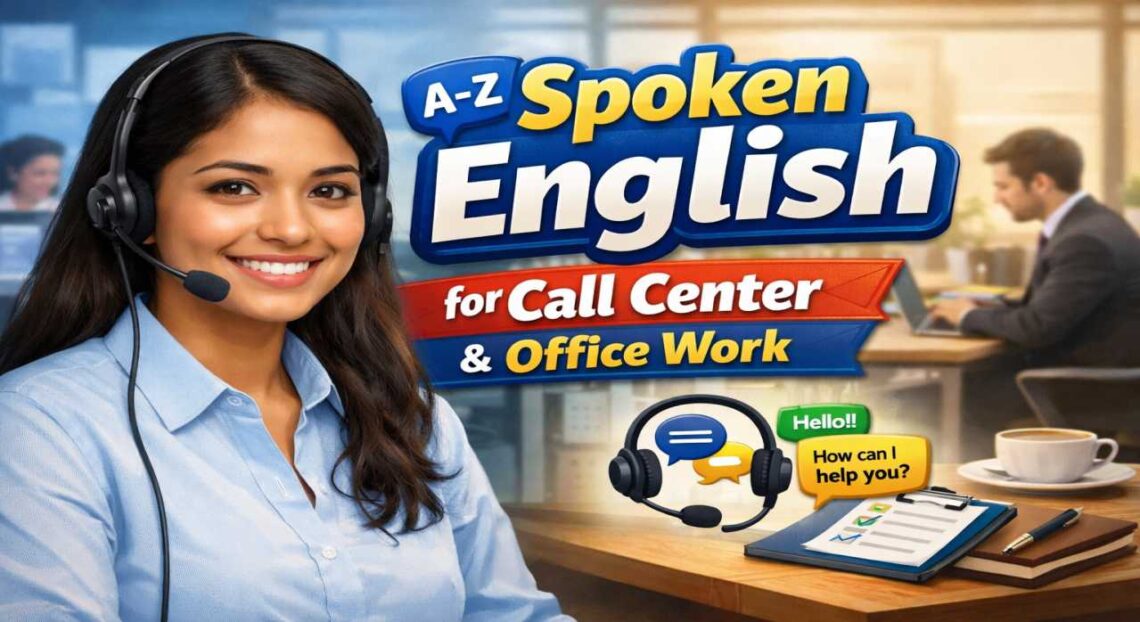
The Ultimate Guide to Spoken English for Call Centers and Office Work: From Nervous to Native
In the modern professional world, English is no longer just a language—it is a global currency. Whether you are answering a customer’s frustrated call in a high-pressure BPO environment or presenting a quarterly report in a corporate boardroom, the way you speak defines your professional identity. However, many job seekers and employees face a common barrier: the “Fluency Gap.” You might know the grammar rules, but when the phone rings or the boss looks at you, the words vanish. If you’ve ever felt this way, don’t worry. This guide will walk you through everything you need to know about mastering professional spoken English, specifically tailored for the Indian corporate and…
-
English Sentences You Can Use in Any Situation: Your Ultimate Communication Toolkit
Have you ever been in a conversation where your mind just goes blank? You know what you want to say, but the words seem to be playing hide-and-seek. It happens to the best of us—especially when we’re trying to master a new language. The secret to sounding natural and confident isn’t necessarily knowing 50,000 dictionary words. It’s about having a “toolkit” of versatile, multi-purpose sentences that work in almost any scenario. In this guide, we’re breaking down the most essential English sentences for daily life, work, and social gatherings. Whether you’re a student, a professional, or someone just looking to improve their conversational flow, these phrases will help you navigate…
-
Mastering the HR Interview: Simple English Guide
If you’ve been practicing your speaking skills through our guide on how to speak English fluently without grammar fear, you’re already halfway there. Now, let’s apply those skills to the interview room. 1. “Tell me about yourself.” This is almost always the first question. It’s not an invitation to tell your life story; it’s a “highlight reel” of your professional journey. 2. “Why do you want to work for this company?” HR wants to know if you’ve done your homework. Avoid saying “I just need a job.” 3. “What are your strengths?” Don’t just list adjectives. Give a tiny bit of context. Dealing with Tough Questions 4. “What are your…
-
The Ultimate Guide: How to Speak English Fluently Without Grammar Fear
Have you ever stood in front of someone, your heart racing, because you wanted to say something in English but couldn’t get the words out? You knew the words. You knew the meaning. But you were paralyzed by one thought: “What if my grammar is wrong?” This is Grammar Phobia, and it is the #1 killer of English fluency. In this massive guide, we are going to break down why this happens and, more importantly, how you can delete that fear from your brain. We’re moving away from boring textbooks and moving toward real, human communication. Part 1: Why We Are Afraid of Grammar (And Why It’s Not Your Fault)…
-
How to Build Your English Vocabulary Fast: 5 Proven Secrets
We’ve all been there: you’re in the middle of a great conversation, you know exactly what you want to say, but you’re missing that one specific word. It’s frustrating, right? Many learners think the solution is to memorize a dictionary. Spoiler alert: It isn’t. If you want to grow your vocabulary quickly and—more importantly—actually remember what you learn, you need a strategy. Here is how to build your English vocabulary fast without burning out. 1. Stop Learning Random Words The biggest mistake students make is learning words they will never use. Why memorize the word “archaeologist” if you only ever talk about “software engineering”? The Strategy: Focus on your “Personal…
-
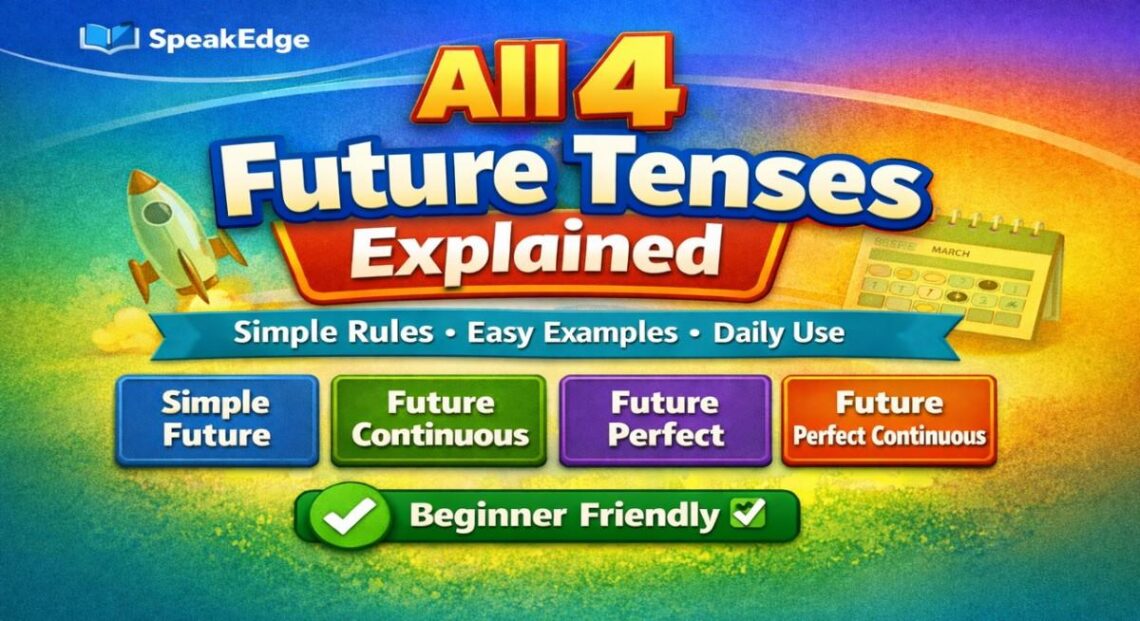
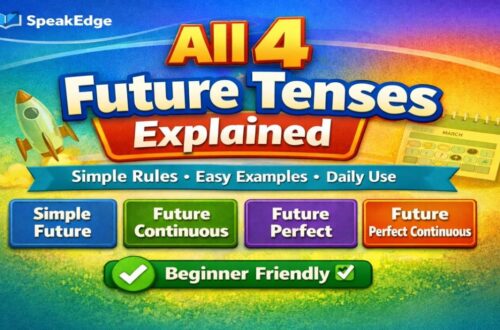
The Ultimate Guide to the 4 Future Tenses (Predicting Tomorrow)
We spend a lot of time thinking about the future. “What will I eat for dinner?” “Where am I going to go on vacation?” In English, we don’t just have one way to talk about the future. We have four. And believe it or not, the difference between “I will call you” and “I will be calling you” can completely change the meaning of your sentence. Whether you are making a promise, a plan, or a prediction, choosing the right tense is the secret to sounding confident. In this guide, we are completing our grammar journey by breaking down the 4 Types of Future Tense. Let’s dive in! 1. Simple…
-
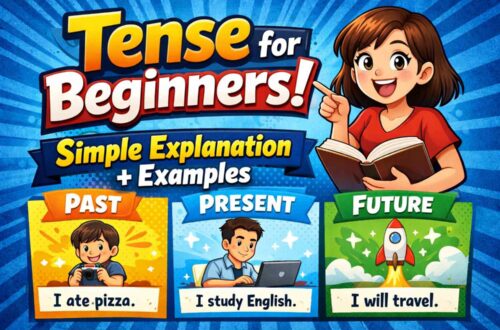
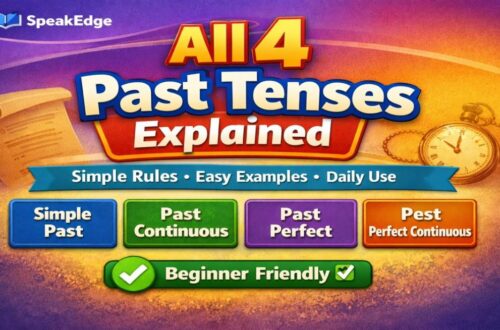
The Complete Guide to the 4 Past Tenses (Finally Explained Simply)
Have you ever told a story and suddenly felt stuck? You want to say what happened, but you aren’t sure if you “had been walking,” “was walking,” or just “walked.” English grammar is tricky, especially when talking about the past. Unlike some languages that just have one way to say “it happened,” English gives us four different ways to describe history. Why? Because English cares about the details. Did it happen quickly? Did it go on for a long time? Did it happen before something else? In this guide, we are going to master the Past Tense. No confusing jargon—just clear rules and examples you can actually use. 1. Simple…
-
The Ultimate Guide to the 4 Present Tenses (With Examples That Actually Make Sense)
Let’s be honest: English grammar can sometimes feel like trying to solve a puzzle where the pieces keep changing shape. You think you know how to talk about “now,” and then suddenly you’re hit with terms like “Perfect Continuous.” But here is the secret: Tenses aren’t just rules to memorize; they are tools to help you tell your story more precisely. Whether you are describing a daily habit, something happening right this second, or an experience you’ve had, the Present Tense has a specific “flavor” for it. In this guide, we are going to break down all four types of Present Tense. No boring textbook jargon—just clear explanations and examples…
-
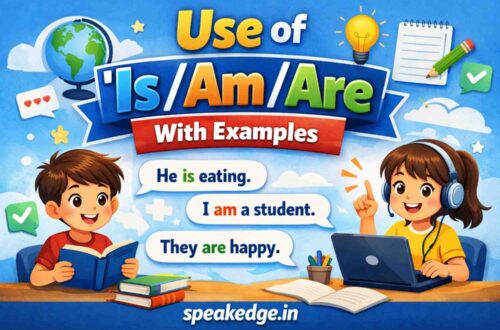
The Ultimate Guide to Using “Is, Am, Are” (With 100+ Examples)
Let’s be honest: English grammar can sometimes feel like trying to assemble furniture without instructions. You think you have the pieces in the right place, but something just looks… off. Among the most common stumbling blocks are three little words that hold the entire English language together: Is, Am, and Are. They seem simple, right? They are some of the first words we learn. Yet, even advanced speakers sometimes hesitate when faced with tricky sentences like “The group of students is/are waiting?” or “Neither of us is/are going?” If you want to polish your emails, ace your exams, or just speak with total confidence, mastering these three words is non-negotiable.…
-
How to Speak English Confidently in Public: The “No Fear” Method
Category: Personal Development / Language Learning Reading Time: 15 Minutes Keywords: Speak English confidently, public speaking tips, overcome stage fright, English fluency, ESL public speaking, No Fear Method Does the thought of standing in front of a room—or even just turning on your camera for a Zoom meeting—make your heart race? Do your palms get sweaty at the idea of speaking English in public? If you nodded your head, let me tell you something important: You are not alone. Millions of non-native English speakers feel exactly the same way. It’s not just about the fear of public speaking (which is already the #1 fear in the world); it is the…